
Why Double Glazing Upgrades Are Ireland’s Most Overlooked Home Energy Improvement
A huge number of homes in Dublin, Wicklow, and beyond are now living with old, inefficient double glazing that quietly wastes heat every single day.
The frames are often fine – it is the glass units, the seals, the hinges, and the handles that have reached the end of their effective performance life.
With over 55 years of glazing experience we have developed a package targets exactly the components that fail.
It keeps the existing frames in place and replaces old inefficient glass to modern high performance ‘A Rated’ glass while draught proofing the window frames.
This delivers much of the comfort and energy saving homeowners expect from brand new windows, but at a much lower cost and with almost no disruption.
Yet most people do not even know this option exists.
This article explains in detail what a double glazing upgrade is, why so many Irish homes now need one, and how the underlying glazing science translates into real comfort and lower heating demand in everyday use.
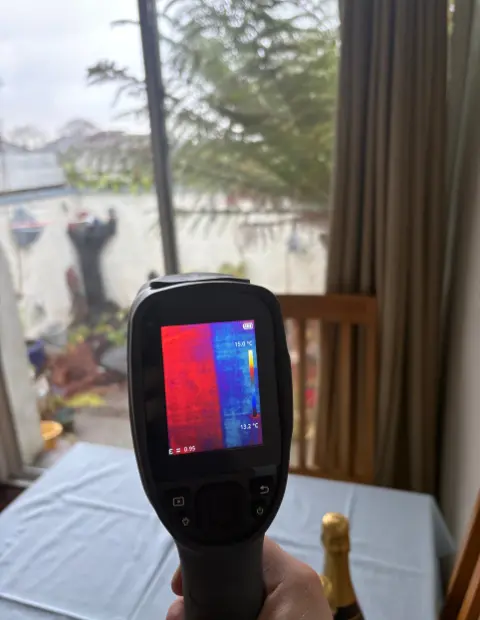
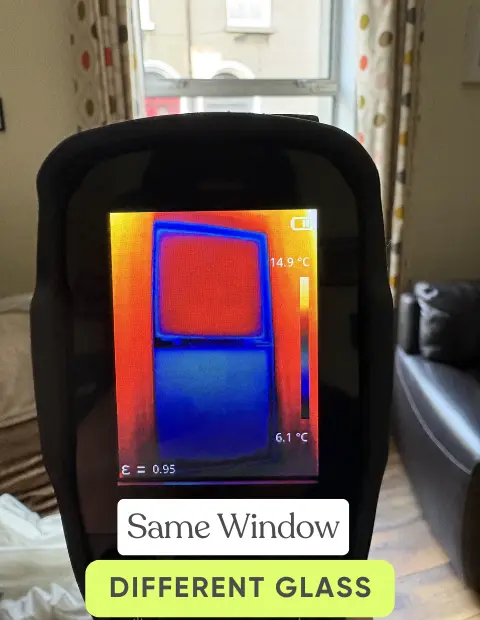
New energy efficient glass on the left shows a warmer inner pane (red). The older 20 year old unit on the right appears blue because it has lost insulation and the glass is much colder.
Thermal scan and double glazing upgrade carried out by by P Fahy Glazing Ltd in Bray Co. Wicklow.
1. Early Generation Double Glazing Is Reaching the End of Its Performance Life
Across Ireland, a huge wave of double glazing was installed during the 1990s and 2000s. At the time, these units represented a major improvement over single glazing. However, they were designed with the technology of that era and have a natural performance lifecycle. Independent guidance from the Sustainable Energy Authority of Ireland (SEAI) also highlights how older window systems lose heat through the glass, seals, and spacers as they age.
Most early generation double glazing lacked features that are now standard. Low emissivity (Low E) coatings were not widely used. Argon gas fills, where they existed at all, were often less tightly controlled. Spacer bars were commonly aluminium rather than modern warm edge composites. Perimeter seals were simpler and less advanced. These details matter, because thermal performance in glazing is built from the sum of many small engineering choices.
Alongside the inherent limitations of older designs, time itself takes a toll. Seals are constantly exposed to ultraviolet light, wind, moisture, and temperature cycles. Gas molecules gradually diffuse through the seal materials. Hinges and handles are opened and closed thousands of times. Frames settle slightly. None of this looks dramatic, but it slowly changes how the window behaves.
By the time a double glazed unit is 12 to 20 years old, it is very common for it to be performing far below current A rated standards, even if it is not obviously “broken”. Rooms feel colder, radiators work harder, and comfort drops. This is not a sign that the entire window is finished. It is a sign that the glazing system and associated hardware have reached the end of their intended performance life and are ready to be upgraded.
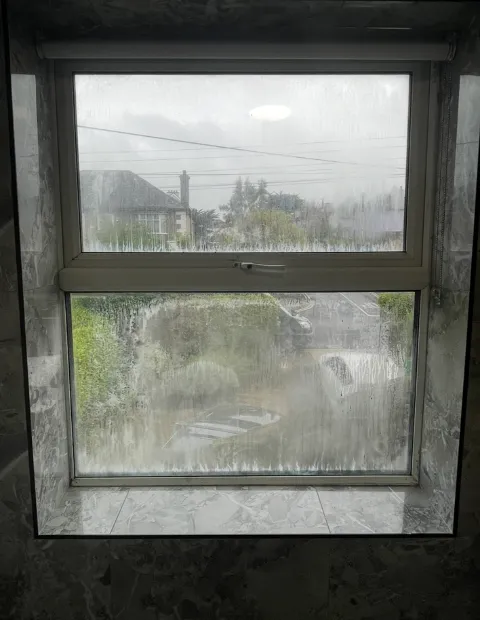
Fogging or misting on theinternal panes of double glazing is the final stage of the glass lifecycle – the performance has already been gone for years and years before this happens.
2. What Really Fails: Glass, Seals, Hinges, Handles
To understand why a double glazing upgrade works so well, it helps to break down what actually fails in a typical window. It is rare that frames themselves are the culprit. In most cases, the weak points are the parts that provide insulation and airtightness.
Gas loss in the insulated glass unit
Modern double glazing relies on an insulated glass unit (IGU) made up of two panes of glass separated by a cavity that is usually filled with argon gas. Argon is denser and less conductive than air. It slows the movement of heat from the warm side of the unit to the cold side.
However, no perimeter seal is completely impermeable. Over many years, argon gradually diffuses out and tiny amounts of air and moisture diffuse in. The rate depends on the original unit quality, seal design, and installation conditions. Early generation units typically lose gas more quickly than modern high specification A rated units.
As gas concentration drops, the insulating effect of the cavity is reduced. The inner pane becomes colder. Radiant and convective heat loss increase. Homeowners feel this as a persistent chill near windows, even if there is no obvious draught.
Perimeter seal degradation
The seals around an IGU serve two critical functions. They hold the unit together structurally and they keep the gas in and moisture out. Over time, seal materials harden, shrink, or micro crack under ultraviolet exposure, weather, and thermal movement.
Eventually, this allows moisture to enter the cavity. At first this is invisible. As the moisture content rises, it begins to condense on the cooler glass surfaces inside the unit, causing misting or fogging between the panes. Once internal condensation appears, the unit has failed fully and must be replaced. Long before visible fogging, however, the loss of gas and change in cavity conditions will already have damaged thermal performance.
Outdated spacer bars
Many older double glazed units use aluminium spacer bars between the panes. Aluminium is highly conductive. It creates a thermal bridge at the edge of the glass assembly, forming a continuous cold ring around the perimeter of the window.
This has two consequences. Firstly, more heat escapes through the window at the edges than through the centre. Secondly, the cold edge cools nearby room air, encouraging condensation and making the window feel colder overall. Modern warm edge spacer bars, made from advanced composite or stainless and polymer hybrids, dramatically reduce this effect.
Hinges, handles, and compression
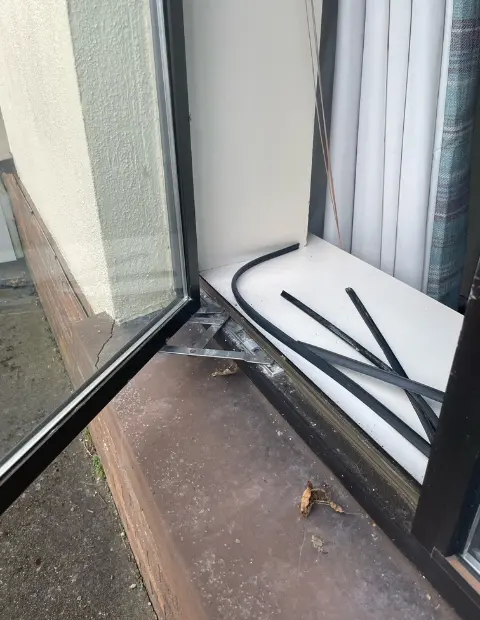
Even where the sealed unit is still intact, older hinges and handles can undermine the window’s performance. Friction stays and locking mechanisms are subject to continuous mechanical stress. Over years of operation, friction pads wear, screws loosen slightly, and sashes “drop” by a few millimetres.
The result is that the sash no longer closes tightly into the frame. The seals are compressed unevenly or not at all along parts of the perimeter. This is one of the most common causes of “mystery draughts” in Irish homes. The window appears closed and even looks aligned, but minute gaps allow cold air to enter.
A proper double glazing upgrade addresses all of these issues together. New glass units restore the thermal core of the window. New or renewed seals re establish the air barrier. Serviced or replaced hinges and handles restore compression and airtight closure. The combination is what delivers the step change in comfort.
3. Why Frames Usually Do Not Need Replacing
Window frames do an important structural job, but they are not the main source of heat loss in most homes. uPVC, aluminium, and well built timber frames can have very long service lives. It is common to find frames from the late 1990s that are still structurally sound and perfectly capable of holding a modern A rated insulated glass unit.
In uPVC frames, the plastic profiles are reinforced internally with steel or other stiffeners. Unless they have been physically damaged or manufactured to very poor standards, they do not typically warp or fail structurally under normal domestic use. Aluminium frames are even more robust. They may be thermally less sophisticated in older designs, but in many cases their structural integrity remains excellent.
Timber frames require more careful assessment, because wood is vulnerable to moisture and rot. However, not all timber frames need replacement. Sound, well maintained timber frames can often be successfully upgraded with new glazing, seals, and hardware. Where we see obvious rot, water ingress, or serious distortion, we advise against a glass only upgrade. In those cases, the frame itself has reached the end of its life and a full replacement is the honest recommendation.
For the majority of uPVC, aluminium, and sound timber frames, a full frame replacement is unnecessary and wasteful. It means ripping out frames that are still structurally good, damaging plaster and paintwork, and sending large quantities of material to landfill. It also means significantly higher overall cost and more disruption to the household.
A double glazing upgrade takes a more precise approach. It acknowledges that the performance problem lies in the ageing glass units, seals, hinges, and handles, not in the frame. By concentrating the work where it is actually needed, it delivers much of the benefit of new windows while preserving the frame investment already made.
4. The Science Behind a Double Glazing Upgrade
A double glazing upgrade is not a cosmetic change. It is a substantial technical improvement driven by advances in glass coatings, cavity gas, spacer design, and air sealing. Understanding the key elements helps explain why the improvement in comfort can feel so immediate.
Low E glass and radiant heat
Low emissivity (Low E) glass carries a transparent coating that reflects long wave infrared radiation back into the room. In plain terms, it bounces a portion of the heat energy emitted by radiators, underfloor heating, and people back into the interior instead of letting it escape through the glass.
Older double glazing often used plain float glass on both panes. These units allow a much greater proportion of radiant heat to pass through to the outside. When you upgrade to an A rated Low E unit, one of the panes is coated, usually on the inner face of the cavity. That coating is almost invisible to the eye but makes a very noticeable difference to how the window feels on a cold evening.
Argon gas fill and convective heat transfer
The space between the panes in a modern insulated glass unit is usually filled with argon gas rather than ordinary air. Argon has lower thermal conductivity and different convection characteristics. It slows down the movement of heat from the warm interior pane to the cold exterior pane.
In older units that have lost much of their argon, the cavity behaves more like an air filled space. Convection currents set up more easily. Warm air near the inner pane is cooled and sinks, creating the familiar “cold fall” that many people feel around older windows. A new argon filled unit calms those convective currents and keeps the inner pane temperature higher and more stable.
Warm edge spacers and edge losses
At the edge of every insulated glass unit is a spacer bar that separates and supports the panes. Traditional aluminium spacers conduct heat readily. They act like a metal strip that connects the outside environment to the inside, drawing heat out and creating a cold band around the perimeter of the glass.
Warm edge spacers use materials with much lower conductivity. By minimising edge losses, they help keep the entire visible area of the glazing closer to room temperature. This is particularly important where furniture is near windows or where people sit close to glazing for long periods.
Airtightness, compression, and sealing
The thermal performance of the glass is only part of the story. Air movement is a powerful driver of heat loss. Even a very small path for air leakage can undermine the theoretical U value of a window system.
A double glazing upgrade includes renewing perimeter seals and ensuring that the sash and frame come together under correct compression. When hinges and locking points are adjusted correctly, seals deform just enough to create a tight, continuous contact all the way around. This is what stops cold outside air from slipping into the room at weak points.
Taken together – Low E coatings, argon gas, warm edge spacers, and restored airtightness – a modern insulated unit upgrades an older window system from a tired, underperforming state to something very close to current new build standards, without the need to remove or replace the surrounding frame.
The Glass and Glazing Federation provides detailed technical information on how Low E coatings and modern insulated glass units reduce heat transfer.
5. How a Double Glazing Upgrade Changes Real World Comfort
Homeowners do not think in terms of U values and spacer technologies. They think in terms of how a room feels in the evening, how often the heating comes on, and whether they notice cold air when they sit near a window. A proper double glazing upgrade produces a set of everyday benefits that are easy to feel and understand.
More stable room temperatures
With better insulation in the glass and tighter seals around the sash, less heat escapes. Rooms warm up more quickly and stay warm for longer once the heating cycles off. The temperature swings that many people are used to – hot when the boiler runs, cool again half an hour later – are reduced. The house feels more consistently comfortable.
Reduced draughts and cold spots
When hinges and handles no longer compress the sash fully, the result is a series of small leaks that feel like draughts. After an upgrade, those leaks are sealed by a combination of new gaskets and properly adjusted hardware. Cold air that used to sneak in around the edges is cut off.
At the same time, the inner glass surface is warmer. That means there is far less cold air “falling” off the glass and flowing across the floor. The familiar cold bands near older windows are greatly reduced or eliminated.
Less condensation
Condensation occurs when warm, humid indoor air meets a surface that is below the dew point. Older glazing, especially around aluminium spacer edges, can easily drop to temperatures that trigger condensation. Modern A rated units keep the inner surface significantly warmer, which raises the threshold at which condensation appears.
This does not mean condensation can never occur, especially in very humid rooms like bathrooms, but many homeowners see a noticeable improvement. Where there is internal fogging between panes, that disappears completely when failed units are replaced.
Improved acoustic comfort
While the primary aim of a double glazing upgrade is thermal, there can also be a benefit for noise. New, correctly sealed units reduce the air gaps through which sound can travel. In some cases, upgrading provides an opportunity to use slightly thicker glass or laminated panes in selected rooms, further improving sound insulation against traffic or external noise.
The net result of all of these changes is not subtle. Many households report that certain rooms feel like different spaces after the upgrade – warmer, quieter, and more comfortable to spend time in.
6. Triple Glazing Versus Double Glazing Upgrade
Triple glazing is often mentioned in discussions about energy efficiency, and it certainly has a role in very high performance or passive house builds. However, in the context of existing Irish homes with serviceable frames, it is important to understand what triple glazing really involves.
Triple glazing is not simply another pane added into an existing frame. In almost all cases, existing uPVC and aluminium frames were never designed to hold triple glazed units. The glass would be too thick and too heavy. The Passive House Institute notes that triple glazing is designed primarily for ultra-low-energy construction, where frames and building fabric are engineered specifically for higher glazing weights and deeper profiles. Attempting to retrofit triple glazing into unsuitable frames risks structural issues, hinge overload, and seal failures.
As a result, any move to triple glazing in an existing home nearly always means full frame replacement. That is a large and costly project. Frames must be removed, reveals opened up, plaster repaired, paintwork renewed, and external sealing re done. It is also significantly more disruptive to daily life than a glass only upgrade.
In contrast, a double glazing upgrade keeps the existing frame and focuses on the elements that drive thermal and acoustic performance. It delivers much of the benefit that people associate with “new windows” – warmer glass, fewer draughts, more stable temperatures – while avoiding the cost and disruption of completely replacing the frame system.
For the vast majority of typical homes in Dublin and Wicklow, a well specified double glazing upgrade is the more balanced choice. It provides a substantial performance improvement that households can feel every day, at a much lower cost than a full triple glazed replacement project.
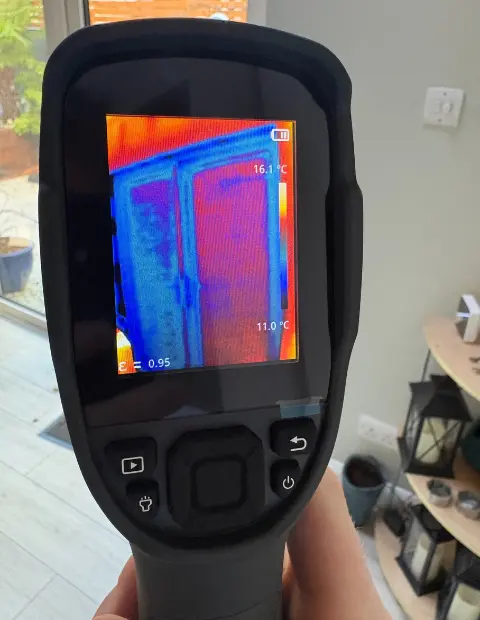
Old, inefficient glazing on the left (cold inner pane shown in blue) compared with upgraded Low E double glazing on the right (warm inner pane shown in red).
7. Common Myths About Double Glazing Performance
Because glazing is a technical subject, a number of myths have taken hold over the years. A few of the most persistent are worth addressing directly.
“My double glazing is fine because it is not fogged”
Internal fogging between panes is a sign of full failure, but performance declines long before this point. Loss of argon, weakening of seals, and hardware wear can all significantly reduce performance while the unit still looks clear. Waiting until misting appears means living for years with underperforming windows.
“If my windows feel cold and draughty, I need completely new windows”
In most cases, it is not the frames causing the problem. It is the aging glass units, flattened gaskets, and dropped hinges. A glass and hardware upgrade is usually enough to restore performance. New frames are only necessary where there is rot, serious damage, or major design flaws in the original installation.
“Upgrading the glass alone won’t make much difference”
This misunderstands where most of the heat is lost. The glass area is usually the largest exposed surface in a window opening. When you replace tired, clear double glazing with modern Low E, argon filled, warm edge units and re establish proper airtightness, the difference is significant and very noticeable in real life.
8. The Double Glazing Upgrade Process Step by Step
For homeowners, one of the most reassuring aspects of a double glazing upgrade is how straightforward the process is compared to full window replacement. No major building works are required, and most properties can be completed within a day.
Initial survey and assessment
A technician visits the property to assess the existing windows. They examine the condition of the frames, check for signs of rot or structural damage, test hinges and handles, and look for obvious sealed unit failures such as fogging or moisture. They also discuss any comfort problems the homeowner notices, such as particular cold rooms or persistent draughts.
Where frames are suitable for an upgrade, accurate measurements are taken for each unit. Any timber frames that show significant rot, or aluminium frames without thermal breaks that cannot be improved by glazing alone, are flagged and discussed honestly.
Specification and manufacturing
Based on the survey, new insulated glass units are specified. For most modern upgrades, this will be a Low E coated unit with argon gas fill and warm edge spacer, sized exactly to fit the existing frame. Toughened or laminated glass is specified where required by safety regulations or site conditions.
The units are then manufactured to order by a glass processor. This ensures that when the upgrade takes place, every new unit is ready to drop into the existing frame without unnecessary adjustment.
Removal of old units
On installation day, the old glass units are carefully removed. Glazing beads are taken off, the unit is lifted out, and the frame is inspected again. Any loose debris, old packers, or degraded sealant is removed to give a clean seating for the new unit.
Installation of new units
The new insulated glass units are then placed in the frame and correctly packed to ensure even support. Glazing beads are refitted securely. At this stage the window once again looks complete, but the upgrade process continues.
Renewal of seals and servicing of hardware
Perimeter seals are inspected and renewed where necessary. Hinges are adjusted so that the sash sits squarely and closes firmly into the frame. Handles and locking mechanisms are checked and serviced so that they pull the sash in under proper compression. Gaps that previously allowed air leakage are removed.
Final checks and clean up
Once all units in a room or elevation have been upgraded, the operation of each window is checked again. The aim is not just cosmetic completion, but functional performance. Only when the technician is satisfied that the windows open, close, and seal as intended is the work considered finished. The area is then cleaned and any old units or debris are removed from site.
From the homeowner’s perspective, the main difference is immediate: clearer glass, quieter operation, tighter closure, and a noticeable change in how the room feels in cooler weather.
9. Costs, Lifespan, and Guarantees
Exact costs depend on window sizes, quantities, and specifications, but one general truth is consistent: a double glazing upgrade is much cheaper than full frame and glass replacement.
Frames represent a large part of the material and labour cost of any window installation. When those frames are retained, the scope of work is focused on the glass and the functional components that genuinely drive performance. This makes the project accessible to many households who would find full replacement financially out of reach.
In terms of lifespan, modern insulated glass units built with current seal and spacer technologies have a long expected service life under normal conditions. While no product lasts forever, a well specified and properly installed A rated unit should provide consistent performance for many years.
To give homeowners confidence, reputable installers back their work with clear guarantees. For example, a 10 year warranty on the integrity of the sealed units is standard for quality upgrades. If internal fogging or condensation appears within that period due to seal failure or manufacturing defect, the unit is replaced under guarantee.
10. Where Double Glazing Upgrades Are Carried Out
Most double glazing upgrades carried out by specialist firms like P Fahy Glazing are in homes and businesses across Dublin and Wicklow. These counties have a particularly high concentration of properties built or refurbished during the double glazing boom years, and many of those properties are now at the point where an upgrade delivers a strong return in comfort and practicality.
Typical areas include established suburbs, newer housing estates, and coastal towns where exposure to wind accelerates hardware wear. Work is carried out in uPVC, aluminium, and suitable timber frames, provided they are structurally sound and suitable for reuse.
For larger projects or commercial properties, upgrade teams can often travel beyond Dublin and Wicklow by arrangement. The underlying principles remain the same wherever the building is located: retain good frames, upgrade the glass and hardware, and restore the window system to a high level of performance.
11. When a Double Glazing Upgrade Is Not the Right Option
Although a double glazing upgrade is suitable for a large percentage of homes, there are circumstances where it is not the correct solution.
If timber frames are extensively rotten, soft to the touch, or visibly distorted, replacing the glass alone is not sensible. The underlying structure is compromised and will continue to deteriorate. In these cases, honest advice is to replace the full window.
Similarly, some older aluminium frames without thermal breaks may not benefit sufficiently from a glass only upgrade to justify the investment. If the frame design itself allows significant thermal bridging, it may be better to consider a full replacement with a modern thermally broken system.
There are also rare cases where original installation quality was so poor that the frame is not anchored correctly or has significant movement. Again, in this scenario, glass alone will not solve the problem.
A responsible upgrade service will always flag these situations at survey stage and explain clearly why a glass only approach is not recommended. The aim is not to fit new glass at any cost, but to deliver a genuine and durable improvement in performance.
12. Conclusion: The Quiet Power of a Double Glazing Upgrade
For many Irish homeowners, the idea of improving window performance conjures images of scaffolding, major construction, and large bills. The reality is that in a huge number of homes, the real performance problem lies not in the frames, but in the ageing glass units, seals, hinges, and handles that were fitted 15 or 20 years ago.
A double glazing upgrade focuses precisely on those failing components. By installing modern A rated insulated glass units, renewing seals, and restoring hardware function, it delivers much of the comfort, warmth, and energy saving that people expect from new windows, but at a much lower cost and with minimal disruption.
In that sense, it is one of the most overlooked home energy improvements available in Ireland today. It does not attract the same headlines as external insulation or full window replacement, but in practical day to day terms, it can transform how a home feels in winter and how often the heating needs to run.
For households in Dublin, Wicklow, and beyond who know that their double glazing is no longer performing as it once did, a carefully planned double glazing upgrade is often the most intelligent, efficient, and honest next step.
For more information on double glazing upgrades, or to have your windows assessed in Dublin or Wicklow, contact P Fahy Glazing Ltd.
Thinking about upgrading your double glazing?
If your home in Dublin or Wicklow feels colder than it should, or your windows are over 15 years old, a double glazing upgrade may restore the comfort and efficiency your home once had. P Fahy Glazing Ltd can assess your existing frames, measure your glazing, and provide a detailed recommendation based on real performance needs.
We upgrade uPVC, aluminium, and suitable timber frames, replacing tired sealed units with modern A rated glass while restoring airtightness through new seals and serviced hardware.
To arrange an assessment or request more information, contact P Fahy Glazing Ltd today.
Double Glazing Upgrades - FAQs
How do I know if my double glazing is no longer performing well?
Many homeowners assume that double glazing either works or doesn’t, but in reality its thermal performance diminishes gradually over time. Common indicators include rooms that cool down quickly after the heating turns off, windows that feel unusually cold when you stand near them, and recurring draughts even though the sash appears to close properly.
Another subtle sign is persistent cold air movement near the glass, especially in the evenings. This is caused by the inner pane becoming cold enough to cool nearby air, creating a downdraft effect. Older units without Low E coatings and with reduced argon gas fill show this behaviour more frequently. Even if the glass appears visually perfect and there is no fogging between panes, a double glazing upgrade may be warranted if comfort has noticeably declined.
Why does double glazing lose insulating performance over time?
A double glazed unit relies on several components working together: a coated glass surface that reflects heat, a gas-filled cavity that slows conduction, a spacer that insulates the perimeter edge, and seals that keep the system airtight. Over time, each of these components undergoes natural degradation.
Argon gas slowly diffuses out of the cavity through microscopic pathways in the perimeter seal. Sunlight and moisture cause the seal materials to stiffen and shrink, making the cavity more vulnerable to moisture ingress. Aluminium spacer bars in older windows conduct heat readily, creating colder edge zones. Meanwhile, hinges, handles, and compressed seals flatten or loosen, allowing air leakage around the sash. None of these changes are dramatic on their own, but together they can dramatically reduce the insulating ability of older double glazing.
Why is the inner pane of older double glazing so much colder than modern A rated units?
The temperature of the inner pane is one of the best indicators of real-world performance. In older units, the absence of Low E coatings allows heat from the room to radiate straight through the glass. The cavity may have lost a significant portion of its original argon gas, lowering its insulation value. Aluminium edge spacers also draw heat outwards, cooling the perimeter and encouraging internal convection currents.
Modern insulated units tackle all of these issues simultaneously. The Low E coating reflects radiant heat back indoors. Argon-filled cavities reduce heat transfer. Warm edge spacers minimise perimeter heat loss. The result is a much warmer inner pane, which translates directly to a more stable and comfortable indoor environment. A double glazing upgrade can restore this benefit even in older frames.
Will upgrading the glass make my home noticeably warmer?
Most homeowners experience a clear improvement in warmth and comfort. The reason is simple: the majority of heat loss through a window occurs through the glass, not the frame. Once the inner pane is warmer and the window becomes more airtight, the room holds on to heat far more effectively. Radiators cycle less often, cold spots near windows disappear, and temperature fluctuations are reduced.
The comfort difference is especially noticeable in bedrooms, living rooms, and north-facing spaces where older glazing can make the entire room feel significantly cooler. A double glazing upgrade brings these rooms back to modern thermal standards without the need to replace the entire window.
How long does a double glazing upgrade typically take?
The process is fast compared to full window replacement. A typical home can be upgraded in a day, though the exact time depends on the number and size of windows. The upgrade involves removing the existing sealed units, installing new insulated units, renewing gaskets where required, and servicing hinges and handles for proper alignment and compression.
Because the frames are not removed, there is no plaster damage, no redecoration needed, and no structural work. Homeowners generally find the process clean and minimally disruptive, with rooms ready to use immediately after installation.
Are uPVC, aluminium, and timber frames all suitable for a double glazing upgrade?
Yes, provided they are structurally sound. uPVC and aluminium frames are particularly good candidates because they tend to remain stable for decades, even when the glazing has reached the end of its lifespan. As long as the frame is intact, square, and capable of holding new insulated units securely, it can be upgraded successfully.
Timber frames require a closer inspection. Sound timber can absolutely be upgraded with new glazing, but frames showing signs of rot, structural softness, or significant distortion should be fully replaced. A professional assessment at survey stage will confirm suitability and outline the best approach for each frame type.
Will a double glazing upgrade help reduce condensation?
Condensation occurs when moisture-laden indoor air meets a cold surface. Older glazing, especially where the inner pane becomes very cold, creates ideal conditions for condensation along the glass and frame edges. By keeping the inner pane warmer, modern A rated units reduce the likelihood of condensation forming under normal humidity conditions.
However, it is important to differentiate between surface condensation inside the room and internal condensation between panes. The former often improves significantly after an upgrade; the latter is a sign of sealed unit failure and is resolved only by replacing the glass.
Does upgrading the glass improve noise insulation as well as heat insulation?
While the primary purpose of a double glazing upgrade is thermal improvement, many homeowners notice a reduction in noise after upgrading. Replacing older units with fresh, properly sealed glazing removes many of the small air paths through which sound travels. In some cases, slightly thicker or laminated glass can be specified for rooms that face a busy road or other noise sources, providing additional acoustic benefit.
The upgrade should not be viewed as a dedicated acoustic solution, but improved noise performance is a common and welcome side effect.
Does a double glazing upgrade change my BER rating?
Door and window performance contributes to overall BER evaluation, but the impact of a glass-only upgrade varies. A modern insulated glass unit improves the U value of each window, which is positive from a BER perspective. However, because BER ratings consider the whole structure, the change may not be dramatic unless other energy upgrades are also carried out.
Regardless of BER score adjustments, the practical improvement for the homeowner is immediate and tangible. Rooms feel warmer, heating demand decreases, and the building envelope functions more effectively.
Is an upgrade disruptive or messy?
No. Because the frames stay in place, the process avoids the mess typically associated with full window replacement. There is no removal of plaster, no disturbance to interior decoration, and no need for painting afterwards. The installer works within the existing frames, ensuring the upgrade is both clean and efficient.
Most work is carried out from inside the room, and with proper preparation, furniture remains undisturbed. Old units are removed from site, leaving nothing for the homeowner to dispose of.
Will a double glazing upgrade last as long as brand new windows?
The longevity of the upgrade depends primarily on the quality of the new insulated glass units and the workmanship during installation. Modern A rated units use far superior seal technology, better spacer systems, and more consistent gas retention than earlier generations. When installed correctly into sound frames, they can provide many years of reliable performance.
Because the frame itself has not been disturbed, its lifespan continues independently of the glazing. As long as the frame remains stable, airtight, and structurally sound, the upgraded units will perform to their rated standard. P Fahy Glazing Ltd offers a 10-year performance guarantee on all insulated glass units.
Can I upgrade only certain rooms or windows first?
Yes. Many households choose to start with the coldest or most frequently used rooms and then upgrade the remaining windows later. Because each window is a self-contained unit within an existing frame, upgrades can be phased easily without affecting the rest of the property. This makes the improvement more flexible and affordable.
What happens if my windows are too old or damaged for an upgrade?
If a frame is significantly warped, rotten, cracked, or otherwise unable to support a modern insulated unit, a glass-only upgrade is not recommended. In these cases, a full window replacement is the correct solution. A thorough survey will identify these issues in advance, ensuring that homeowners receive honest guidance about what is safe and effective.
These cases are the exception rather than the rule. Most uPVC and aluminium frames, and many well maintained timber frames, remain perfectly suitable for upgrading even after 15 to 25 years.
How does a double glazing upgrade compare to installing triple glazing?
Triple glazing can offer excellent thermal performance, but it usually requires replacing the entire frame system because existing uPVC and aluminium frames cannot safely support the increased thickness and weight. This makes triple glazing a major construction project rather than a simple upgrade.
A double glazing upgrade delivers much of the comfort improvement that people seek, but without frame removal or the significant expense associated with triple glazed replacements. For most Irish homes, especially those built with typical uPVC systems, upgrading the glazing offers a more balanced and practical route to better performance.
Do I need planning permission for a double glazing upgrade?
No. Because the frames remain in place and the external appearance of the house is not altered, planning permission is not required. The work is considered a like-for-like improvement rather than a structural change.
Why does older double glazing often create a ‘cold fall’ effect near the glass?
The cold fall effect is a common but poorly understood phenomenon in homes with ageing glazing. It occurs when the inner pane becomes cold enough to cool the layer of air directly beside it. Cold air is heavier than warm air, so it sinks downwards and spreads across the floor. Homeowners often mistake this for a draught coming through the frame, but in reality it is a convective loop driven by a cold glass surface.
This effect becomes more pronounced as glazing ages because argon depletion, lack of Low E coating, and conductive aluminium spacers lower the inner pane temperature. A modern A rated insulated unit raises the inner surface temperature substantially, disrupting that convective loop. The result is a more stable feeling environment with fewer unexplained cold zones around windows.
Why do older double glazed units sometimes look clear but perform poorly?
A visually clear unit can still be thermally inefficient. Misting between panes is only one failure mode, and it represents the late stage of seal breakdown. Long before visible fogging occurs, gas loss and perimeter hardening gradually reduce insulation.
A 15 or 20 year old sealed unit may have lost a large portion of its argon fill, leaving a cavity that behaves much like plain air. In fact, most standard double glazing of the time was made with no insulating gas.
Its spacer bar may conduct heat aggressively to the outside. Its inner pane may allow a large proportion of radiant heat to escape. None of this is visible to the naked eye, but the thermal consequences are substantial. This is why many homeowners notice a dramatic improvement after upgrading even though their old glass appeared “fine”.
Is there a difference in performance between replacing just one failed window and upgrading all of them at once?
Upgrading one failed or fogged window will address the immediate issue, but the thermal comfort of the room will still be influenced by the weakest remaining units. A home functions as an interconnected system. If several windows are approaching the end of their performance life, the overall thermal envelope may still struggle.
That said, upgrades can be phased with no disadvantage. Many homeowners choose to start with the coldest or most frequently used rooms. The performance benefit in each upgraded room is independent and immediate. However, the full comfort and efficiency improvement is achieved when all older units have eventually been upgraded.
Can a double glazing upgrade help with overheating in summer?
In certain orientations, yes. South and west facing rooms can experience solar gain issues, especially where older clear glass allows large amounts of infrared radiation to pass into the home. Modern insulated units with Low E coatings reduce the transmission of long wave radiation while still allowing visible light into the room.
While a double glazing upgrade is not a substitute for dedicated solar control glass, many homeowners notice more stable summer temperatures simply because the modern glazing reflects a portion of heat energy that older units would have absorbed. The improvement is most noticeable in attic conversions, conservatories, and rooms with large glazing areas.
How do I arrange an assessment for my home?
Arranging an assessment with P Fahy Glazing Ltd is straightforward. One of our technicians will visit your home to examine the condition of your existing frames, take precise measurements of each window, assess the state of the hinges, seals, and handles, and identify any signs that your current glazing has begun to underperform. After the survey, we provide a clear explanation of the upgrade options and confirm whether your frames are suitable for new A rated insulated units. The visit typically takes 20 to 40 minutes for an average property and requires no preparation by the homeowner.
Why does Low E glass make such a noticeable difference even though the coating is invisible?
Low E coatings work on a part of the electromagnetic spectrum that human eyes cannot see. They reflect long wave infrared radiation, which is the form of heat emitted by radiators, flooring, and people. Without a Low E coating, that heat passes through the glass and is lost to the outside environment.
When a Low E coating is applied to one of the internal surfaces of an insulated glass unit, the coating reflects much of that heat back into the room while still allowing natural daylight to enter. This dramatically changes how warm the inner pane feels during colder weather. Although the coating is invisible, its effect on radiant heat flow is profound and easily felt in daily use.